
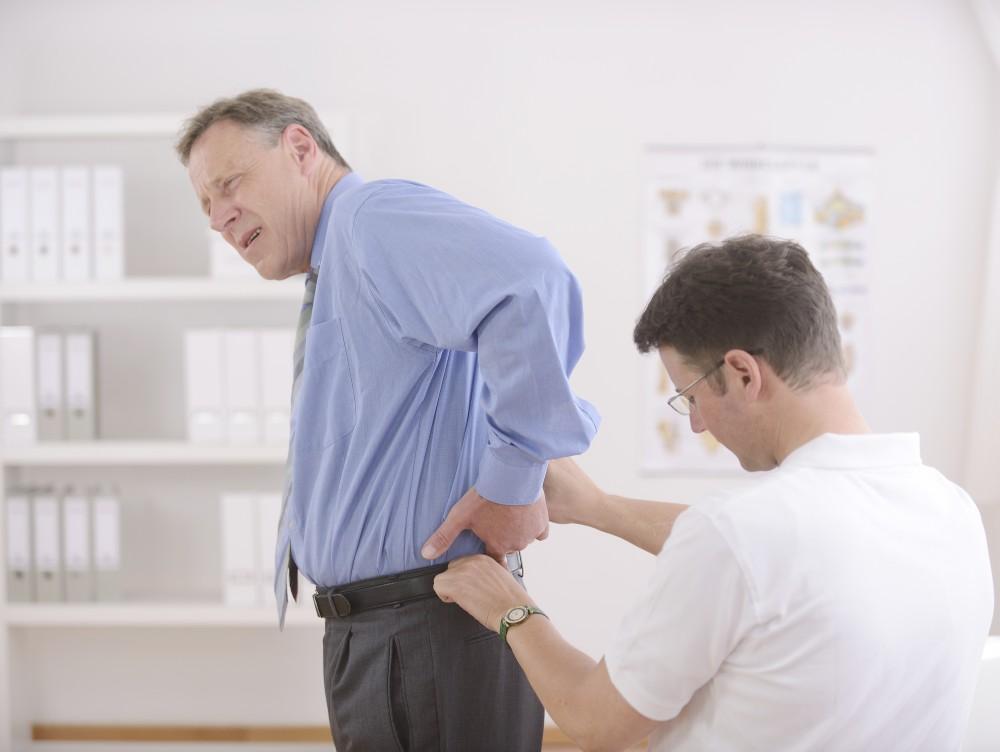
Sciatica develops when your sciatic nerve gets compressed, causing irritation and inflammation. These nerves start on the left and right side of your lower spine, run through your buttocks and down into your legs, before finally stopping in your feet. That’s why sciatica symptoms — like numbness, weakness, tingling, and pain — radiate from your lower back; they follow your inflamed sciatic nerve.
But what causes sciatica in the first place? In most cases, sciatic nerve irritation arises from a problem in your lower back, including:
- A herniated or bulging disc
- Extra growth of bone, or bone spurs
- Narrowing of the spinal canal, or spinal stenosis
Unfortunately, carrying excess weight not only increases your risk of having these back problems, but it can also make your symptoms worse and impact your recovery. At Advanced Spine and Pain, we help you understand the connection between obesity and back problems like sciatica.
With our locations in Fairfax County and Stafford, Virginia, as well as the Greater Baltimore area, it’s easy to find pain management solutions so you can finally find relief.
Obesity and back pain
When you’re carrying extra body weight, it increases the pressure on your lower back and spine. In fact, every extra pound of weight on your frame applies an additional four pounds of force to your back muscles and ligaments, spine, and joints. This can lead to two serious issues.
First, it increases your chances of back problems that lead to sciatica symptoms. Second, it can take you longer to recover from these injuries because of the additional stress on your body.
When you start your weight loss journey, you’ll start seeing immediate results. That’s because sciatic nerve inflammation often begins to fade as soon as the abnormal stress on your back starts decreasing.
For maximum results in treating sciatica, we recommend starting a structured weight loss program in combination with other treatment options, including exercise.
Exercise, obesity, and sciatica
When you’re overweight and suffering from sciatica symptoms, it can be hard to get enough exercise. But exercise is an essential ingredient in your sciatica treatment. At Advanced Spine and Pain, our team takes a comprehensive approach to managing sciatica symptoms with regular exercise, dietary improvements, physical therapy, and interventional pain treatments, like steroid injections and epidurals. By using this approach, we can help you reach several specific goals, including:
- Controlling your pain
- Reducing your inflammation
- Increasing your range of motion
- Strengthening and stretching your body
- Improving your balance and coordination
- Teaching you proper body mechanics
Incorporating exercise and weight loss into your sciatica treatment plan can also improve your back health, protect you from reinjury, and reduce your chances of having symptoms again in the future.
For more information on how your weight affects your sciatica, call us at Advanced Spine and Pain, send us a message on our website, or use the handy Appointment Requests button to set up your consultation.
]]>