
Dupuytren’s contracture is a hand condition that can quietly develop over time and eventually make it difficult to fully straighten one or more fingers. Many people first notice a small lump in the palm and assume it is harmless. However, understanding Dupuytren’s contracture early can help you recognize symptoms sooner and explore treatment options before daily activities become limited.
In this guide, we’ll explain what Dupuytren’s contracture is, the early warning signs, how it progresses, and the treatment options available today.
What Is Dupuytren’s Contracture?
Dupuytren’s contracture is a condition that affects the connective tissue beneath the skin of the palm, known as the palmar fascia. Over time, this tissue thickens and tightens, forming cords that pull one or more fingers toward the palm.
The ring finger and pinky finger are most commonly affected, although other fingers can be involved. The condition usually develops slowly and is often painless in the early stages, which is why many people delay seeking care.
While Dupuytren’s contracture is not dangerous, it can significantly affect hand function if it progresses untreated.
Early Signs of Dupuytren’s Contracture
Recognizing the early signs of Dupuytren’s contracture is important, especially because symptoms may be subtle at first.
Early Changes You Might Notice
One of the first signs is a small, firm lump or nodule in the palm. The skin over the palm may appear puckered or dimpled. You may also feel tightness when placing your hand flat on a table.
These early changes are often painless, which can make them easy to ignore.
When Symptoms Are Easy to Miss
Because Dupuytren’s contracture progresses slowly, many people adapt without realizing it. Mild stiffness or reduced finger extension may not interfere with daily life at first. However, early evaluation can help determine whether monitoring or treatment is appropriate.
Common Symptoms and Stages
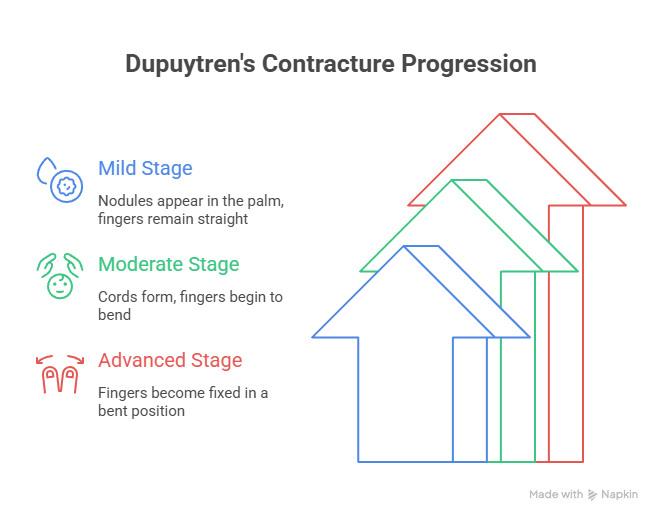
Dupuytren’s contracture typically progresses through stages, with symptoms becoming more noticeable over time.
Mild Stage
In the mild stage, nodules are present in the palm, but the fingers remain mostly straight. Hand strength and movement are usually unaffected.
Moderate Stage
As the condition progresses, thick cords form beneath the skin. One or more fingers may begin to bend toward the palm, making it harder to fully straighten the hand.
Advanced Stage
In advanced cases, the fingers become fixed in a bent position. This can interfere with everyday tasks such as gripping objects, typing, shaking hands, or placing your hand flat on a surface.
What Causes Dupuytren’s Contracture?
The exact cause of Dupuytren’s contracture is not fully understood, but several risk factors are known.
Known Risk Factors
Genetics play a major role, and the condition often runs in families. It is more common in men and typically appears after age 50. Certain medical conditions, such as diabetes, as well as smoking and alcohol use, are also associated with a higher risk.
What We Still Don’t Fully Understand
Not everyone with risk factors develops Dupuytren’s contracture, and the rate of progression varies widely. Some cases remain mild for years, while others worsen more quickly.
How Dupuytren’s Contracture Is Diagnosed
Diagnosis is usually made through a physical examination. A healthcare provider will examine your palm and fingers and assess finger movement.
One common assessment is the tabletop test, which checks whether you can place your hand flat on a table. Imaging tests are rarely needed unless another condition is suspected.
Early diagnosis allows for better planning and monitoring.
Dupuytren’s Treatment Options
Treatment for Dupuytren’s contracture depends on symptom severity and how much the condition affects hand function.
When No Treatment Is Needed
If finger movement is not limited and daily activities are unaffected, careful monitoring may be recommended. Some people never require intervention.
Non-Surgical Treatments
For moderate contractures, minimally invasive options may help improve finger extension. These include collagenase injections, which help break down the thickened cords, and needle fasciotomy, which releases the cords using a fine needle.
These treatments often have shorter recovery times but may carry a risk of recurrence.
Surgical Treatment Options
Surgery may be recommended for more advanced cases. Procedures such as fasciectomy involve removing the affected tissue to restore finger movement.
Recovery may take several weeks and often includes hand therapy to regain strength and flexibility.
According to the Mayo Clinic, treatment decisions depend on contracture severity, overall health, and functional goals.
Recovery, Outcomes, and Recurrence
Recovery time varies depending on the treatment approach. Minimally invasive procedures often allow a quicker return to normal activities, while surgery requires more structured rehabilitation.
Hand therapy plays a key role in recovery and long-term outcomes. It’s important to understand that Dupuytren’s contracture can recur, even after successful treatment, but many patients experience meaningful improvements in hand function.
When Should You See a Specialist?
You should consider seeing a specialist if finger bending worsens, daily activities become difficult, or stiffness progresses quickly. Early evaluation can help you avoid more advanced contractures and explore conservative options first.
Understanding warning signs early is similar to recognizing when musculoskeletal symptoms need attention, such as knowing when lower back pain becomes serious and requires medical care.
For a broader look at the underlying causes of spine-related symptoms, you may also find it helpful to review What Causes Lower Back Pain? Common Triggers & Signs.
Key Takeaways
Dupuytren’s contracture is a common hand condition that often develops gradually. Early signs can be subtle, but progression may lead to functional limitations if left untreated.
The good news is that multiple treatment options are available, ranging from observation to minimally invasive procedures and surgery. Early recognition and individualized care can help preserve hand function and quality of life.