
Herniated discs are a common cause of back and neck pain, and they can cause a host of other symptoms too. While some herniated discs can resolve on their own, other times the nerve-related problems they cause can become worse, even causing long-term or lifelong damage.
At Advanced Spine and Pain, we offer state-of-the-art treatments for herniated discs, helping men and women relieve pain and other symptoms while also restoring normal function in and around the spine. Here’s how we can help you relieve painful symptoms and prevent further damage.
Herniated discs: Causes and symptoms
Your spine is composed of a series of bones or vertebrae that form a tunnel or conduit for all your nerves as they travel from your brain to every other part of your body. Between each pair of bones is a spongy disc. Discs help provide shock absorption for your spine, protecting it from jolts and other injuries, and they also help your spine stay flexible. Usually, your discs are contained within the boundaries of the vertebrae, but sometimes, a disc can “slip” or bulge and become pinched or herniated between the vertebrae. When that happens, the disc can wind up pressing on the nerves as they exit your spine.
Because herniated discs press on nerves, they can cause local pain in your back and neck as well as pain and other symptoms anywhere along the pathway of the compressed nerve. Some of the most common symptoms of herniated discs include:
- pain or aching near the spine, especially the lower back, upper back or neck
- pain or aching radiating into your shoulder, arm, buttocks or leg
- tingling extending into your arm or leg
- numbness or pins and needles sensations in your arms, legs, hands or feet
In more severe cases, a herniated disc can interfere with your ability to coordinate movements, like walking or gripping objects, or it can cause urinary or bowel incontinence. Treating a herniated disc early usually can prevent more serious issues from occurring.
That’s what you can expect when you have a herniated disc. Now, what causes them in the first place? Often, a disc becomes herniated as the result of an injury like a fall or sports accident. Lifting heavy objects or even poor posture can cause discs to “slip” too. As we get older and our discs become weaker and less resilient, they’re more likely to slip or become damaged in other ways.
Herniated disc treatment options
In nearly all cases, treatment begins with conservative options like physical therapy, gentle stretching exercises and medication to relieve both discomfort and nerve compression. Steroid injections in the space around the spine may also help reduce pain and inflammation to give the disc time to heal. When these conservative treatments don’t work, surgery might be your best bet. At Advanced Spine and Pain, we offer two primary surgical treatments for herniated discs.
Microdiscectomy
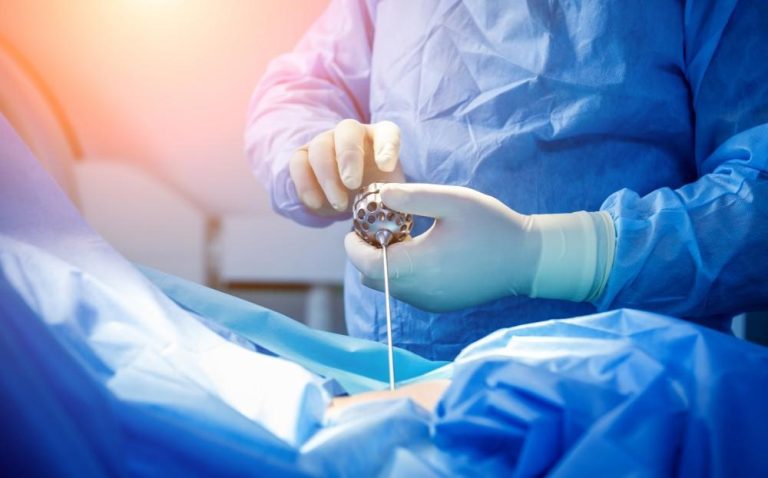
In this procedure, very tiny incisions are made in your back, so the doctor can access the disc and remove the portion that’s pressing on the spinal nerves. If the surgeon sees any other problems like bone spurs, those can be treated at the same time before the incisions are closed. Microdiscectomy is typically performed as an outpatient procedure, which means you’ll go home the same day.
Laser endoscopic discectomy
During this procedure, the doctor makes a tiny incision in your back near the herniated disc. The incisions are used to admit a long, flexible instrument called an endoscope. The endoscope contains a very small camera designed to capture “live” video of the spine, which it sends to a video monitor. Your surgeon uses those images to guide special microsurgical instruments to remove the damaged portion of the disc. Once the procedure is completed, the incision is covered with a bandage. As with microdiscectomy, you’ll go home the same day you have your surgery after a brief period of recovery.
Put an end to herniated disc pain
At Advanced Spine and Pain, we offer custom care plans aimed at helping every patient get the care they need to feel better fast. Using state-of-the-art techniques, we can help you relieve disc pain and prevent more serious problems from developing. To find out what’s causing your painful symptoms and to learn more about the treatment options we offer, contact the practice today.
]]>