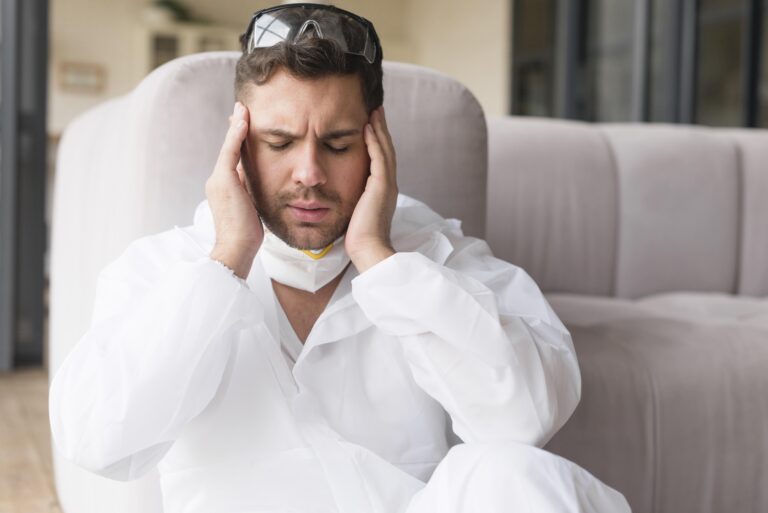
Your child comes home from school with their head buried in their hands — again. They’re sensitive to light, nauseated, and just want to lie in a dark room. You’ve ruled out a fever. You’ve ruled out screen time. And yet the headaches keep coming back.
If this sounds familiar, your child may be experiencing migraines in children — a real, diagnosed neurological condition that affects up to 10% of school-age kids. It’s not attention-seeking. It’s not “just a headache.” And the good news is, with the right knowledge and care, it’s very manageable.
Here are 7 essential things every parent should understand.
1. Can Children Really Get Migraines?
Yes — absolutely. One of the most persistent myths about migraine is that it only affects adults. In reality, migraines affect roughly 2–5% of preschoolers, 10% of school-age children, and 20–30% of adolescent girls. nih
Migraine is not a personality trait or an exaggeration. It is a neurological disease — one that runs in families. If one or both parents have a history of migraines, their child’s risk rises significantly. Family history is one of the strongest predictors of pediatric migraine.
It’s also worth knowing that not all childhood headaches are migraines. Tension-type headaches, sinus headaches, and cluster headaches each have distinct features. Tension-type headaches tend to present as continuous, band-like pain and lack the photophobia, phonophobia, nausea, and vomiting that often accompany migraines. Getting the diagnosis right matters, because treatment differs significantly between types. nih
2. How Migraines in Children Differ from Adults
Many parents expect their child’s headache to look like an adult migraine — a throbbing, one-sided pain. But migraines in children often present quite differently, which is part of why they’re frequently missed.
Children’s migraines typically affect both sides of the head, whereas adult migraines more often are one-sided. Children’s migraine attacks are also often shorter than those in adults, though they can still be disabling. Cleveland Clinic
Younger children may not be able to describe their pain in words. Instead, watch for behavioral cues: retreating to dark rooms, refusing food, becoming unusually quiet or clingy, or crying without an obvious cause.
There’s also an interesting pattern in who gets migraines by age. Pre-pubertal boys are actually more affected than girls — but after puberty, migraines become significantly more common in girls. This shift is tied to hormonal changes and is something many parents don’t expect. nih
3. Pediatric Migraine Symptoms: What to Look For
Symptoms by Age Group
Migraine symptoms in children aren’t uniform — they shift meaningfully as a child develops. Preschoolers may appear generally ill and pale, with abdominal pain, vomiting, and a strong need to sleep. Children aged 5–10 often experience bilateral frontal headaches with nausea, abdominal pain, and sensitivity to light and sound. Middle schoolers may begin experiencing auras, while older adolescents can have bitemporal or unilateral headaches with variable pain patterns. nih
Recognizing these age-specific signs early helps parents seek appropriate care instead of waiting for symptoms to “look like” the adult version they know.
What Is Abdominal Migraine?
This is one of the least-known — and most frequently missed — forms of pediatric migraine. In abdominal migraine, a child experiences recurring episodes of stomach pain, nausea, and vomiting, often without any headache at all. It tends to affect younger children and is frequently mistaken for gastrointestinal issues or anxiety.
If your child has recurring unexplained stomach episodes that come and go, resolve completely, and are accompanied by pallor or fatigue, ask their doctor specifically about abdominal migraine.
Warning Signs vs. Emergency Red Flags
Knowing how to tell if a child has a migraine — versus something more serious — is critical for parents.
Typical pediatric migraine symptoms include:
- Moderate to severe throbbing or pulsating head pain
- Nausea or vomiting
- Sensitivity to light, sound, or smells
- Pain that worsens with physical activity
- Relief after sleeping
Seek emergency care immediately if your child experiences:
- A sudden, “thunderclap” headache that comes on in seconds
- A headache following a head injury
- Headache with stiff neck and fever
- Changes in vision, speech, balance, or consciousness
- Headaches that wake them from sleep repeatedly
These red flags could indicate conditions unrelated to migraine that require urgent evaluation. When in doubt, err on the side of caution.
4. Common Migraine Triggers in Kids
Identifying triggers doesn’t cure migraines, but it dramatically reduces their frequency. Research shows that stress is the most commonly reported trigger in children and adolescents, followed by lack of sleep, warm climate, and video games — and the mean number of triggers per child is approximately 7. nih
Common triggers to track include:
- Stress — School exams, bullying, social pressure, and family conflict are among the top culprits
- Sleep disruption — Both too little and too much sleep can trigger an episode
- Skipping meals or dehydration — Blood sugar dips are a well-known trigger
- Bright or flickering lights — Fluorescent classroom lighting is frequently a factor
- Screen time — Extended use of phones, tablets, and computers
- Certain foods — Processed foods with MSG, artificial sweeteners, chocolate, and caffeine
One of the most effective tools is a simple headache diary. Tracking the date, duration, possible triggers, and medications used helps both parents and doctors identify patterns that aren’t always obvious in the moment.
5. How Migraines Affect School and Daily Life
The impact of pediatric migraine extends far beyond the headache itself. Poor school performance is more likely in children with episodic and chronic migraine compared to children without headaches, and performance is significantly influenced by severity, duration, frequency of attacks, and associated symptoms like nausea. nih
Children who miss school frequently due to migraines can fall behind academically, feel isolated from peers, and develop secondary anxiety about returning to class.
Parents can advocate for their child by:
- Communicating with school staff — Let teachers and the school nurse know about your child’s diagnosis and what to do during an episode
- Requesting a 504 Accommodation Plan — This is a formal educational plan that can provide accommodations like access to a quiet room, permission to take medication at school, or extended deadlines during a migraine episode
- Keeping a consistent routine — Regular sleep and meal schedules reduce frequency for many children
Children with migraine commonly experience mood changes before, during, or after attacks — and mood-related comorbidities like anxiety and depression are worth monitoring alongside headache management. If your child seems increasingly withdrawn or anxious around headache episodes, bring it up with their provider. nih
For families managing chronic pain conditions in children, ASAP’s resources on chronic pain management and headache care offer additional context on how persistent pain affects daily function.
6. Migraine Treatment Options Safe for Kids
Acute (Abortive) Treatment
When a migraine starts, the goal is to stop it as quickly as possible. For migraines in children, the most commonly recommended first-line treatments are:
- Ibuprofen (Advil, Motrin) — Effective for many children when taken at the first sign of a headache, before pain becomes severe
- Acetaminophen (Tylenol) — A reasonable alternative, particularly for younger children
One crucial point many parents miss: aspirin should NOT be given to children or teenagers for headache or pain relief. Aspirin use in children with viral illnesses has been linked to Reye’s syndrome, a rare but serious condition affecting the brain and liver.
For adolescents with moderate-to-severe migraines that don’t respond to OTC options, triptans may be appropriate. Some triptans are FDA-approved for use in patients 12 and older and can be highly effective when prescribed correctly.
Medication Overuse Headache (MOH) is a concern in children just as it is in adults. If your child is reaching for pain medication more than 10–15 days per month, the medication itself can begin causing daily headaches. This cycle is important to recognize and discuss with a provider early.
Preventive Treatment
Preventive therapy is typically considered when a child experiences four or more migraine days per month, or when attacks are severely disabling even if infrequent.
Preventive options your child’s doctor may discuss include:
- Medications such as amitriptyline, propranolol, or topiramate — used off-label or with FDA guidance in pediatric patients
- Magnesium supplementation — Some evidence supports it as a gentle preventive option for children
- Biofeedback and cognitive behavioral therapy (CBT) — Non-pharmacological therapies like biofeedback are being used with promising results in pediatric migraine prevention. These teach children to recognize and manage physiological responses to stress, giving them tools they can use throughout life nih
- Sleep and lifestyle hygiene — Consistent bedtimes, regular meals, and adequate hydration form the foundation of any prevention plan
For more detail on how medications like triptans and CGRP inhibitors compare for headache management, see ASAP’s guide on best migraine medications.
7. When Should Your Child See a Neurologist?
This is one of the most common questions parents ask — and one the top online resources tend to answer vaguely.
Here’s a practical framework:
Start with your child’s pediatrician if:
- Headaches are new or mild
- Attacks respond to OTC medication
- There are no neurological warning signs
Request a specialist referral if:
- Headaches are occurring more than 4 days per month
- OTC medications are no longer working
- Migraines are causing significant school absences
- Your child’s headache pattern has suddenly changed
- There are associated neurological symptoms (vision changes, weakness, confusion)
Imaging such as an MRI may be appropriate for children under 3 with headaches, those with a new severe headache type, or those showing symptoms like changes in vision, swallowing difficulty, or abnormal gait. American Migraine Foundation
A pediatric neurologist or a pain specialist with experience in headache disorders can offer a comprehensive evaluation, formal diagnosis under current ICHD-3 criteria, and a personalized treatment plan.
At Advanced Spine and Pain, our specialists provide expert headache and migraine care for patients across Virginia, Maryland, and Delaware — including evaluation and management for complex cases where standard approaches haven’t provided relief. Learn more about headache and migraine treatment at ASAP.
The Bottom Line for Parents
Migraines in children are real, common, and treatable. The earlier a correct diagnosis is made, the sooner a management plan can be put in place — protecting your child’s quality of life, school performance, and long-term neurological health.
Better diagnosis and treatment of pediatric migraines can reduce the burden of migraines into adulthood — and left untreated, childhood migraine carries the risk of progressing to chronic migraine, with 15 or more migraine days per month. nih
If your child’s headaches are interfering with school, sleep, or daily life, don’t wait for things to improve on their own. Speak with your child’s doctor, track their symptoms, and seek specialist input when needed.
The team at Advanced Spine and Pain is here to help families get the answers — and the relief — they deserve.