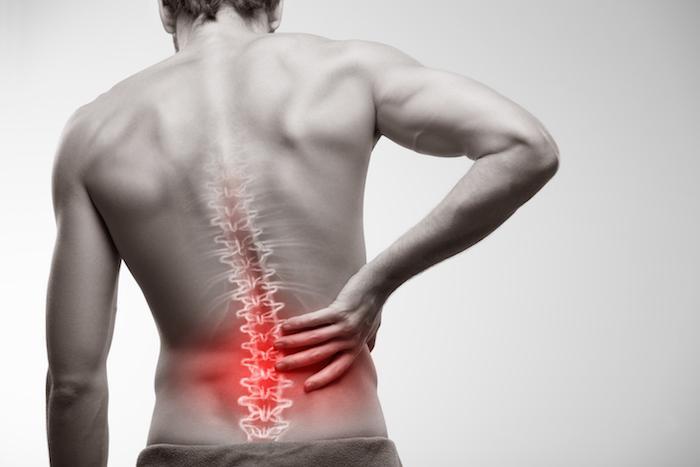

Your back is a complex mechanism with many moving parts that allow you to stand, walk, and twist. It supports you whether you’re simply standing or sitting or doing something more strenuous like raking the yard or playing tennis.
Our need for a strong, functional back is something that’s easy to take for granted — until problems and pain arise.
Your entire spinal column is equipped on both sides with nerves that protrude through holes in your bones. More specifically, they’re nerve roots, otherwise known as radicular nerves. Pain emanating from these nerve roots that’s attributed to inflammation is called radiculitis, and it can be both persistent and excruciating.
The Advanced Spine and Pain team has helped countless patients who suffer with radiculitis, and they’ve stepped in with treatments that can stop the condition in its tracks.
Dr. Thomas Raley, Dr. Brian Lee, and Dr. Randy Davis possess the expertise needed to customize a successful treatment plan to address your radiculitis pain, and their genuine concern for you is apparent every time you meet.
Radiculopathy versus radiculitis
Radiculopathy and radiculitis are often used interchangeably, but the former is a broader condition, and refers to all problems that aggravate the spine’s nerve roots. Radiculitis, on the other hand, describes a spinal nerve root that causes pain specifically because it’s inflamed.
Different types of radiculitis
It’s important to note that your radiculitis pain can originate in three different places.
- Cervical radiculitis affects the top part of your spine, and you feel pain in your neck, shoulders, arms, hands, and fingers
- Thoracic radiculitis causes pain and tightness in the next portion of your spine, where your chest is located
- Lumbar radiculitis pain causes the lower part of your spine to hurt, so you feel it in your lower back, your buttocks, down your leg, and into your foot
In addition to pain, radiculitis is often accompanied by numbness, tingling,and weakness. Radiculitis is associated with many degenerative conditions, hereditary factors, and injury.
How can I get relief from my radiculitis?
Although a host of treatments is available for radiculitis, from over-the-counter and prescription pain medications and physical therapy to icing and heating therapy, sometimes none of them end up working.
The Advanced Spine and Pain team adopted an innovative treatment that helps if radiculitis relief has been elusive for you: epidural steroid injections. These contain a highly effective combination of a local anesthetic and steroid anti-inflammatory medications.
Since these treatments are applied to the exact spot of your pain, we administer a different type of injection based its location:
- Caudal epidural steroid injections address lumbar radiculitis
- Transforaminal epidural steroid injections focus on relieving pain at the point where your nerve exits your spine
- Interlaminar epidural steroid injections can be given at every point on your spine
An epidural steroid injection is a fast-acting, long-lasting “one-two punch” that knocks out your radiculitis pain in a matter of just 1-2 days, typically.
What’s an epidural steroid injection session like?
We administer the epidural steroid injections in our comfortable clinical treatment space, and we give you a local anesthetic at the site where we’ll inject you, so you feel no discomfort.
Your customized treatment plan may call for just a single injection or more than one. Each takes about 10-15 minutes, and when the injection process is complete, we watch you closely for about half-an-hour before we release you.
At home, feel free to apply ice to your injection site(s) and expect to feel results either very soon after treatment or within 2-4 days. But don’t become concerned if your pain actually worsens initially; this “things get worse before they get better” phenomenon happens often before you feel improvement after a day or two.
As always, your physician discusses your treatment plan with you in detail, including how many injection sessions you should get, which depends on your pain and the condition you’re treating.
Pursue a long-term solution for your radiculitis pain
We have much faith in epidural steroid injections because, in exchange for a brief, comfortable treatment, you’re pain-free for several months. Call one of our offices today to find out more, or simply book an appointment online.
]]>