
The discs in your spine help keep you upright and mobile, but one of the most common spinal injuries that hampers your activity and comfort is a herniated, or bulging disc. About 2% of adults suffer one annually — that’s about 5,160,000 individuals.
There are a variety of treatments orthopedic specialists use to address herniated discs, from physical therapy to oral pain medications, but sometimes a surgical solution is the only option that brings lasting relief.
Dr. Thomas Raley, Dr. Brian Lee, and Dr. Randy Davis offer expert treatment not only for patients suffering with herniated discs, but those affected by many painful conditions. They listen carefully to your history of pain, fully investigate solutions that are suited to the outcome you desire, and approach your care with a level of knowledge and warmth that’s rare.
The Advanced Spine and Pain team is dedicated to helping you live life to the fullest, free from pain.
The facts about herniated discs
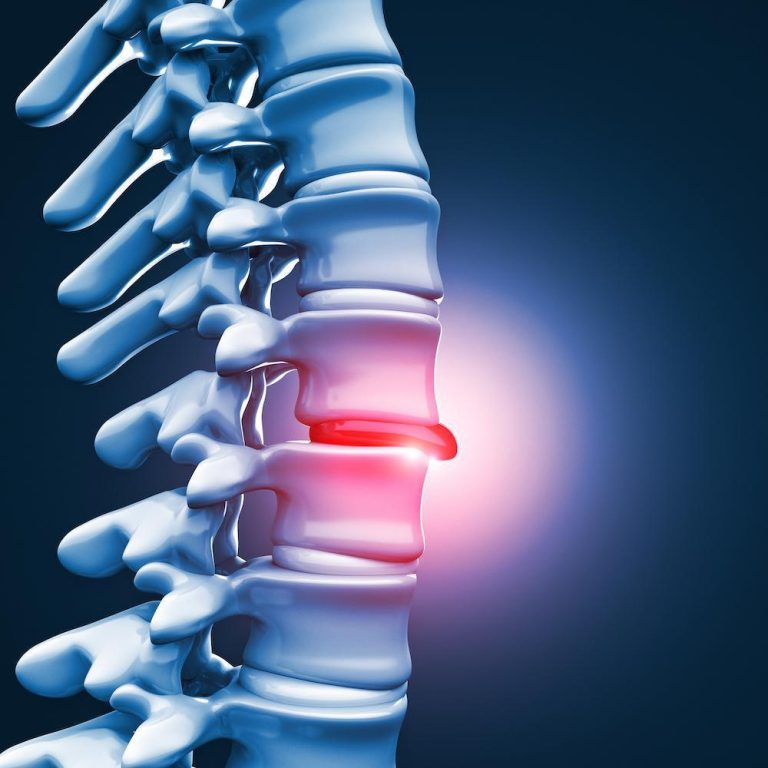
There’s no question — herniated discs are no fun. Pain results when the center of your disc begins to bulge and put pressure on your nerves and spinal cord.
The pain can range from mild to intense and may affect areas other than your back. A herniated disc may cause sciatic pain, which radiates from your buttocks down your leg, and sometimes even into your foot. You might also suffer from leg and foot tingling or lack of sensation, as well as muscle weakness.
Depending on where your herniated disc is, you can experience pain in your shoulder blades, neck, arms, hip, or anywhere on your leg.
The nerve pressure can be excruciating and dramatically limit your ability to enjoy normal, everyday activities.
When a surgical solution is necessary for a bulging disc
We carefully evaluate how effective and successful every possible treatment for your herniated disc might be, from noninvasive treatments, including physical therapy and medication, to minimally invasive ones, such as epidural steroid injections.
However, we may conclude that the best option for you is a surgical procedure called microdiscectomy, where we remove the portions of your disc that are causing you so much discomfort.
The good news is that this is a minimally invasive procedure, meaning that instead of large incisions and a lengthy recovery time, our surgeon makes just a few small incisions and uses a microscope to help guide him, as well as a laser and tools specially designed for this type of surgery. During your microdiscectomy, we may also correct other problems that we discover.
Minimally invasive surgery is far superior to traditional open surgery because it’s so much less traumatic to your body. These procedures involve less pain, bleeding, and scarring, no tissue or muscle damage, and more rapid recovery.
Even better, microdiscectomy is an outpatient procedure, so you’re home soon afterwards, and immediately notice relief from your pain. You should feel “back to normal” after a few weeks of recovery.
Microdiscectomy is an appropriate treatment for patients who don’t respond to other approaches.
Weighing the benefits and risks of microdiscectomy
Although the surgery doesn’t guarantee you won’t experience another herniated disc in the future, if you do, you may not need another microdiscectomy. Your risk of excessive bleeding and infection are greatly reduced because this is minimally invasive surgery, and the high skill level of your surgeon means that you’re at low risk for nerve damage.
Microdiscectomy’s benefits outweigh its risks, when you consider the fact that your disc correction is definitive, the procedure isn’t traumatic, recovery is quick, and relief is significant. In fact, a 2015 study found that approximately 84% of those who had microdiscectomies enjoyed enduring recovery.
Steps you can take to lower your risk of another herniated disc include maintaining a normal weight, refraining from smoking, steering clear of lifting heavy things, and avoiding prolonged periods of sitting.
Call the Advanced Spine and Pain office that’s most convenient to you to set up an appointment for relief from your herniated disc, or book one online. We serve residents all over Maryland, DC, and Virginia.
]]>