
Opioid misuse and abuse have ravaged the United States over the last two decades to the point that opioids were responsible for two out of three overdose deaths in 2018, and a staggering 750,000 Americans have died as a result of an opioid overdose since 1999.
Opioids are a broad class of drugs that include many well-known prescription painkillers such as oxycodone, the synthetic opioid fentanyl, and the illegal drug heroin.
The Advanced Spine and Pain team has helped countless patients escape the tight grasp of opioid addiction, thanks to innovative treatments and meeting our patients where they are as they seek solutions.
Dr. Thomas Raley, Dr. Randy Davis, and Dr. Brian Lee, who is board certified in both anesthesiology and pain management, approach each patient struggling with opioid addiction with a combination of vast clinical expertise, specialized training, and nonjudgemental compassion.
Why are opioids so easy to get addicted to?
Opiates, which are naturally derived from the poppy flower, and opioids, which are at least partially synthetic, prove very effective for pain because they successfully block pain signals that are directed throughout your body from your brain.
Significant amounts of dopamine are released when you use opioids, and dopamine is the neurotransmitter, or chemical messenger, that heightens your sense of pleasure.
When you develop an addiction, you want that feeling of pleasure more and more, and with opioids, you need to take increasing amounts to get the “high” you desire. Once addicted, a downward health spiral occurs that leads to:
- Hypoxia, which occurs when your brain is deprived of oxygen
- Collapsed veins and hepatitis (if injected)
- Heart infections
- Constipation
- Compromised immune response, increasing your risk for infection
A paradoxical effect of opioid misuse and abuse is that the drugs can actually heighten your sensitivity to pain, even though they are prescribed to offer relief from it.
Beating an opioid addiction requires a team approach
You’re not alone when you’re treated for opioid addiction here at Advanced Spine and Pain. We face your dependence on opioids together.
We exhaustively study your medical history, the cause of your chronic pain, your opioid use trajectory, your current overall health, and health challenges and risks you face as a direct result of opioid use.
Innovation in treating opioid addiction
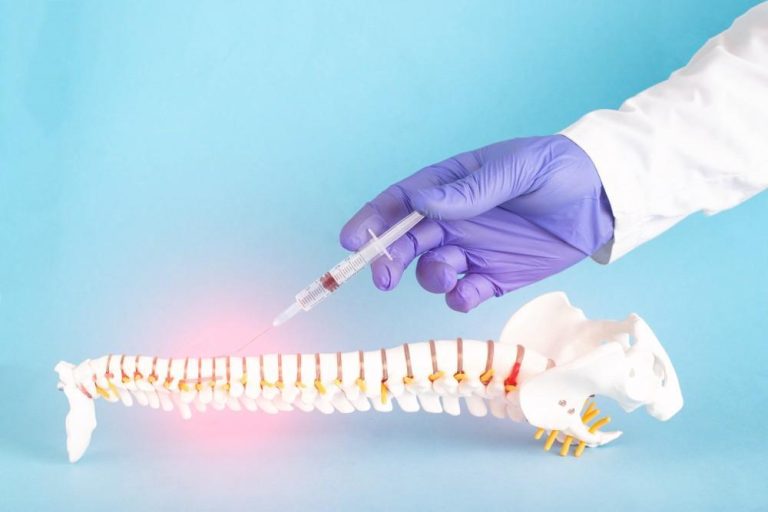
We offer multiple treatments for opioid addiction, but one of the most innovative and successful has proven to be intrathecal drug delivery implantation, otherwise known as a pain pump. A pump sends pain medications straight to your cerebrospinal fluid, where there are many pain receptors.
Pain pumps offer significant benefits if you’re struggling with opioid addiction:
- You receive greatly reduced amounts of medication because your need is lessened
- Lower doses of pain medication mean fewer, less severe side effects
- Your decreased dependence on opioids is the natural result
- You enjoy enhanced quality of life
Since the pain pump delivers medication in such a targeted way, you no longer handle medication manually, or struggle with when and if you should take them, and your pain is managed in a consistent way that also presents less risk for misuse and abuse.
It’s important to note that we are the only practice in our area that provides this therapy.
The first step of pain pump treatment: A trial run
If our team determines that a pain pump is the best treatment for you, we first work with you to gradually lower your medication dosage by half before you start with the treatment.
Next, before you can have your pain pump semi-permanently placed, you need to go through a trial phase using it. This ensures that the long-term placement site will be optimal and that the pump method is indeed right for you.
We insert a thin catheter into your spine to access your spinal fluid. An X-ray allows us to move the catheter to the desired location, and this insertion process takes only 30 minutes.
Microdoses of pain medication are added to your spinal fluid during the next several days via the catheter. If the treatment works well during this period, you’re ready for a pain pump to be placed in the same spot semi-permanently.
Long-term pain pump placement
Our surgeon places your pain pump and catheter at the site where your trial was successful — usually under your abdomen — and you receive general anesthesia prior to your procedure.
Recovery time averages 6-8 weeks, but you feel relief from your pain right away.
Pain pump treatment could be your key to recovery from opioid dependence
Learn if you’re a candidate for pain pump treatment, which can be your key to freedom from opioid dependence. Call one of our seven conveniently located offices to schedule an appointment, or book one online.
]]>