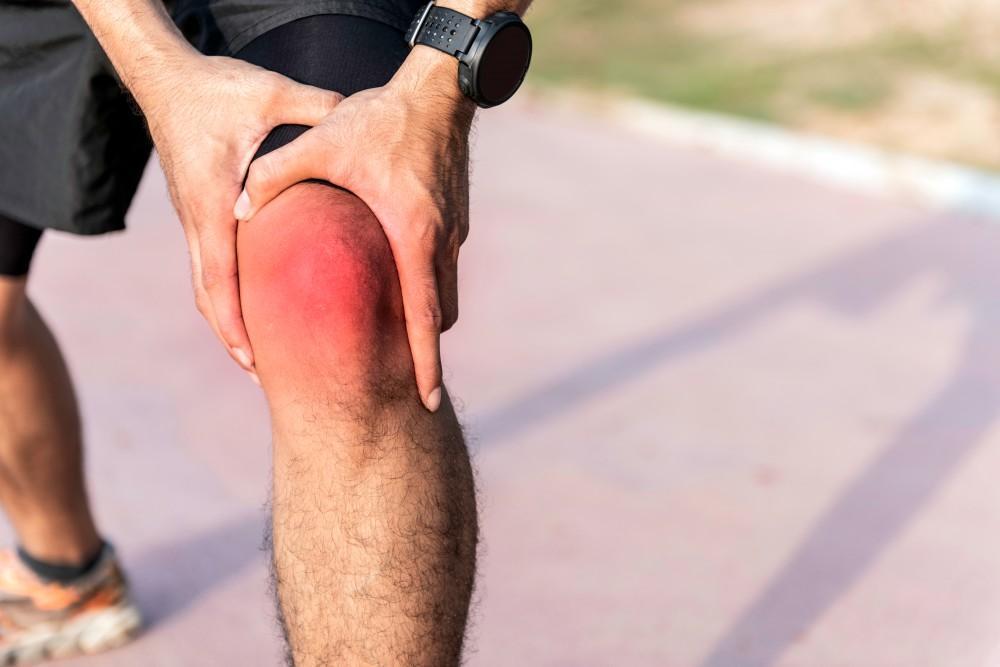
Your knees are exceptional joints, taking you through your travels for a lifetime and allowing you to walk, run, jump, kneel, and more. They’re also some of your body’s most complex joints, which makes the knees prone to injury and other painful problems.
When patients visit Advanced Spine and Pain for knee pain, our highly skilled and compassionate team stops at nothing to find the best solution, and it’s always tailored to your needs. You’re in the best hands here since we aim to be your partner in care for the long term, not just a quick fix. We listen with sensitivity and respect your perspective as a patient.
The fascinating anatomy of the knee
A trio of bones unites to form your knee joint: the thighbone (femur), shinbone (tibia), and kneecap (patella). Slippery articular cartilage envelops the ends of your thighbone and shinbone, enabling the bones in your knee to move smoothly and comfortably when you straighten and bend your leg. The sturdy meniscal cartilage between your thighbone and shinbone works like a shock absorber.
Different ligaments (connective tissue that connects bones to bones) and tendons (connective tissue that connects muscle to bones) connect your thighbone to your lower leg bones.
Unusual things that go awry with the knee
Knee pain can be debilitating — especially when it becomes chronic — since it isn’t only uncomfortable, it limits your mobility. Common sources of knee pain are traumatic injury, osteoarthritis, muscle strains, and damaged ligaments and cartilage.
Other causes of knee pain are less talked about but widespread nonetheless:
1. Infection
You may not associate infection with joint pain, but a condition known as septic arthritis is caused by viral or bacterial microorganisms, which attack the fluid-filled synovial lining that lubricates the knee joint.
In addition to pain, septic arthritis causes other troublesome symptoms, like stiffness, swelling, and flu-like symptoms. If you have these symptoms, you should seek medical treatment promptly.
It’s also important to know that a completely separate infection, such as a stomach virus, can lead to knee pain because it can cause an autoimmune reaction.
2. Gout
This type of arthritis is usually associated with piercing pain in the big toe joint, sometimes out of the blue. However, gout can affect other joints, including the knee, and cause visible redness at your knee joint, as well as make your knee feel warm to the touch.
3. Baker’s cyst
If you have a knee condition or injure your knee, synovial fluid can leak where it isn’t supposed to go — behind the knee. This puts you at risk of forming a Baker’s cyst, a sac filled with fluid that forms in the back of the knee, where the synovial fluid leaks.
This condition causes swelling, a feeling of pressure behind the knee, pain, and stiffness.
4. Arthrofibrosis of the knee
This condition is caused by accumulated scar tissue in your knee after an injury or a surgical procedure. Symptoms include pain, trouble bending and straightening your leg, joint warmth, swelling, and stiffness. You may even hear a grating sound when you move your knee.
Whether your knee pain is caused by a condition that you hear or read a lot about, like a torn meniscus or pain from taking a spill, or if its origins are not as widely discussed or covered, your Advanced Spine and Pain provider can offer you an array of innovative treatments so you’re able to move comfortably again, free from pain.
Depending on the specifics of your condition, we may recommend:
- Over-the-counter or prescription pain medication, which relieves pain and swelling
- Physical therapy, which reduces nerve pressure and increases flexibility
- Steroid injections to address tissue inflammation
- Regenerative treatments that harness your body’s healing power
- Viscosupplementation treatment (hyaluronic acid injections) for arthritis
If these methods prove unsuccessful in bringing you the relief you need, your doctor may advise you to have a surgical procedure, such as a total knee replacement, to solve your issue once and for all. Today’s minimally invasive techniques make this surgery much easier to recover from.
Don’t accept another day of pain and movement problems caused by a knee condition or injury. Get help from the caring team at Advanced Spine and Pain.
Call the ASAP office closest to you and schedule an appointment so your provider can start creating a treatment plan for you, or contact us through our website.
]]>