When you experience back pain, what differentiates one type from another isn’t usually on your mind. But it’s good to familiarize yourself with disc condition symptoms, so you can get appropriate treatment.
Dr. Thomas Raley, Dr. Randy Davis, and Dr. Brian Lee offer progressive treatments no matter which disc problem is causing you to suffer. A combination of factors, some unavoidable, conspire to cause disc degeneration, but the ASAP team has unrivaled tools to remedy your disc issue.
What is the purpose of discs?
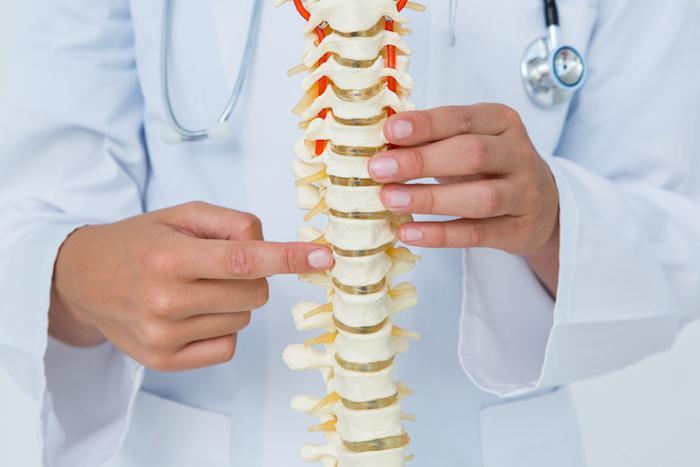
Discs are made from cartilage, and serve as shock absorbers. These anatomical workhorses are positioned between your vertebrae, and each has a tough exterior that surrounds a flexible, soft interior.
Unfortunately, many factors can lead to disc problems, including:
- Age
- Repetitive movements performed at work or recreating
- Sports injuries
- Falls
Disc pain ranges from imperceptible to debilitating, so it’s smart to team up with a competent orthopedic specialist.
Herniated versus bulging discs: What’s the difference?
As their name indicates, bulging discs do just that: They extend downward and beyond where they should normally be, and only the outer durable layer of the disc is involved.
Often age-related, a bulging disc is a progressive condition and may not even affect your entire disc. A bulging disc (or more than one) can cause pain in your buttocks, lower back, or neck, but you might feel little to no pain at all.
What happens when you have a herniated or ruptured disc is less about the disc changing position and more about its soft interior getting exposed via a crack in the outer layer.
A herniated disc is often caused by an injury or awkward movement, so the onset of pain is typically sudden.
Occasional confusion, even for doctors
Sometimes even experts have trouble deducing which disc problem a patient has. The conditions can be difficult to distinguish from one another because a disc with several herniations can mimic the appearance of a bulging disc.
In these instances, imaging tests help us arrive at the correct diagnosis.
Many treatments for bulging and herniated discs
Since bulging discs can advance to the point of being herniated, we may try to slow progression and relieve pain, if you’re experiencing it, with medication or epidural steroid injections. These shots contain both anti-inflammatory steroids and an anesthetic. Physician-recommended exercises that you do religiously can also help.
Bulging discs also contribute to lumbar spinal stenosis, where your lower back nerves are compressed. We offer CoflexⓇ decompression and laminectomy surgical procedures for this problem.
Decompression surgery takes pressure off your spinal cord and nerves, and you receive a titanium implant that offers support to your spine. Laminectomy removes the lamina, or the back part of your vertebrae, which also lessens spinal nerve pressure.
We strive to provide personalized care, and always consult your detailed medical history before we chart a course of action. We also listen carefully to your history of pain, because disc problems aren’t always accompanied by back pain.
With herniated discs, you may also suffer from neck, shoulder, leg, arm, or hand pain, as well as tingling and numbness. Weakness in your legs or feet may even point to nerve damage, so it’s best to get your pain checked as soon as possible.
Our diverse treatment menu for herniated discs includes:
- Over-the-counter or prescription medication
- A course of physical therapy
- A lumbar brace for added spinal support
- Facet injections (when steroids are injected into your lower back)
- Epidural steroid injections
- Radiofrequency ablation (precise heated energy is directed at your area of pain with a microelectrode)
- Surgical alternatives
We perform several minimally invasive surgical procedures that provide almost immediate relief for severe herniated disc cases.
During a microdiscectomy, our surgeon makes a series of tiny incisions over your affected disc, removing parts of your herniated disc through those incisions. This relieves pressure considerably.
A laser endoscopic discectomy requires just a single incision. Your surgeon inserts a thin tube with a very small camera on it into the proper location to remove portions of your disc and, again, relieve nerve pressure.
We also perform a minimally invasive spinal fusion surgery, which strengthens your spine. During this procedure, we connect two or more of your vertebrae, which reduces the risk of their shifting and facilitates healing in the same way your body does.
Finally, a spinal cord stimulator addresses chronic herniated disc pain when nothing else has worked. This device has electrodes that are placed on your spinal pain source and prevent pain signals from reaching your brain. First, we surgically insert it temporarily as a test. If placement proves correct, we insert it more permanently, and you regulate it with a handheld tool.
Seek disc treatment promptly
Make an appointment to learn about your options by calling one of our offices or booking online.
]]>