If you live in Virginia or Maryland, you’ve probably noticed it: as soon as temperatures drop or a storm rolls in, your joints ache more, your back stiffens up, and pain you thought was manageable suddenly feels harder to control. You’re not imagining it. Does cold weather make pain worse? For a significant portion of chronic pain patients, the answer is yes — but the full story is more nuanced than most people realize.
In this article, we’ll break down what the science actually says, explain the biological mechanisms at work, address the role of barometric pressure and humidity, debunk the “just move somewhere warm” myth, and give you a practical seasonal management plan backed by clinical insight.
Does Cold Weather Make Pain Worse? What the Research Says
What Studies Show — and Where It Gets Complicated
The short answer is: cold weather does appear to worsen pain for many people, but research has been slower to confirm exactly how and why.
A study of 200 people with knee osteoarthritis conducted across the United States found that both changes in barometric pressure and ambient temperature independently influence knee pain severity. That’s meaningful — but the same researchers noted that while the association was consistent, the magnitude of the effect was modest compared to what would be considered clinically significant.
In fibromyalgia research, the impact of weather on pain was statistically significant, but the clinical impact was questionable at the group level — with significant individual differences in how people respond to changes in barometric pressure.
What does this mean practically? The weather-pain connection is real, but it doesn’t affect everyone equally. For some patients, a cold front triggers a major flare. For others, the same conditions go unnoticed.
Why Some People Feel It More Than Others
Some possible reasons why certain individuals are more affected by barometric pressure changes include existing joint damage, nerve sensitization from conditions like fibromyalgia or neuropathy, heightened interoception — the ability to sense internal bodily signals — and possibly genetic predisposition to greater pain sensitivity.
If you have a pre-existing spine condition, arthritis, or nerve-related pain, you’re more likely to experience weather sensitivity — and that’s a signal worth discussing with your care team.
How Cold Affects the Body: The Mechanisms Behind the Pain
Synovial Fluid Thickening and Joint Stiffness
Your joints rely on synovial fluid for smooth, pain-free movement. When the weather gets colder, synovial fluid thickens, which reduces its slipperiness, increases joint friction during movement, and over time can wear down protective cartilage — resulting in more pain.
This is one of the most consistent explanations for why cold weather and arthritis pain tend to go hand-in-hand.
Vasoconstriction and Reduced Circulation
When it’s cold outside, nerves and blood vessels constrict in the arms and legs, decreasing blood flow and circulation to keep our inner core and vital organs warmer. This decreased blood flow can lead to stiffness, making movement more painful.
Less oxygen and fewer nutrients reaching your joints and muscles means they’re less equipped to handle stress — and more prone to discomfort.
Muscle Tension and Nerve Sensitivity
Cold temperatures cause muscles to contract, increasing tension around nerve endings. In patients who suffer from pain due to oversensitive nerves, colder temperatures can cause widespread muscle and joint pain through an increase in nerve receptivity. Cold weather also has a negative influence on nerve conduction, making any pre-existing nerve damage more noticeable.
For spine patients dealing with conditions like sciatica or peripheral neuropathy, this nerve conduction effect can be especially significant during colder months.
Barometric Pressure and Pain: What’s Actually Happening
What Is Barometric Pressure and Why Do Joints Respond to It?
Barometric pressure refers to the weight of the air pressing down on the Earth’s surface. When air pressure drops, soft tissues around the joint expand slightly under the lower pressure. That swelling increases pressure on the joint itself, resulting in stiffness and discomfort or pain during movement.
This explains why many patients report feeling worse before a storm arrives — the drop in pressure precedes the rain or snow.
Barometric Pressure and Back Pain Specifically
While most articles focus on knee and joint pain, the back is equally affected. A cohort study analyzing the relationship between pain intensity and weather conditions over six months found that temperature and atmospheric pressure may impact low back pain intensity.
For patients managing herniated discs, spinal stenosis, or chronic lower back pain — conditions frequently treated at Advanced Spine and Pain — tracking pressure-related flares can help you and your provider better time interventions.
Why the Timing of Pressure Changes Matters
Research has found that even small fluctuations in barometric pressure can be linked to increased pain sensitivity in individuals with neuropathic conditions. The cumulative effect of repeated pressure changes — not just one big drop — may compound the pain response over a season.
Does Humidity Affect Chronic Pain?
Cold gets most of the attention, but humidity is a significant, underrecognized trigger — particularly in the mid-Atlantic region, where summer humidity rivals winter cold for discomfort.
High humidity levels can trigger pain, particularly in individuals with inflammatory conditions like rheumatoid arthritis and fibromyalgia. Excess moisture in the air can lead to swelling in joints and tissues, increasing discomfort and stiffness. Humidity can also contribute to dehydration, which can worsen muscle cramps and joint pain.
This means chronic pain patients in Virginia and Maryland may face weather sensitivity challenges across multiple seasons — not just winter. If you find your pain is as bad in August as in January, humidity may be a bigger factor than cold.
The “Florida Argument”: Does Moving Somewhere Warm Actually Help?
Many patients dealing with winter flares ask the same question: Should I just move to Florida?
The answer may surprise you. One study found that people in mild, moderate San Diego reported more weather-related pain than residents of Boston. As one physician explained, the sensitivity is to change — and barometric pressure shifts in every zip code. There is no avoiding it.
Barometric pressure fluctuates everywhere — even in warm, sunny climates. A move south might reduce cold-related stiffness, but it won’t eliminate pressure-related flares. There is also evidence that extreme heat may aggravate joints similarly to extreme cold.
The key insight here is that your body is responding to change, not just temperature. Stable weather — regardless of baseline temperature — tends to be better tolerated than frequent shifts. This is why some patients feel worse during transitional seasons like fall and spring than in the depths of winter.
Arthritis Pain and Weather: A Special Case
Research shows that about two-thirds of people with arthritis notice their pain gets worse in cold weather, making arthritis one of the conditions most consistently associated with weather sensitivity.
The reasons differ slightly between osteoarthritis and rheumatoid arthritis. In OA, structural joint changes and cartilage damage make joints more reactive to fluid viscosity changes and pressure fluctuations. In RA, the inflammatory component means that immune activity — which can be influenced by environmental and seasonal factors — plays an additional role.
When it is cold outside, people also tend to move around or exercise less, which can lead to a loss of muscle strength and flexibility and, therefore, more joint pain. This inactivity cycle is one of the most overlooked contributors to winter arthritis flares — and one of the most controllable.
If you’re experiencing increased knee pain or joint swelling that seems to worsen each winter, it’s worth a formal evaluation to distinguish weather sensitivity from disease progression.
Managing Weather-Related Pain Flares: What Actually Works
Stay Warm — Strategically
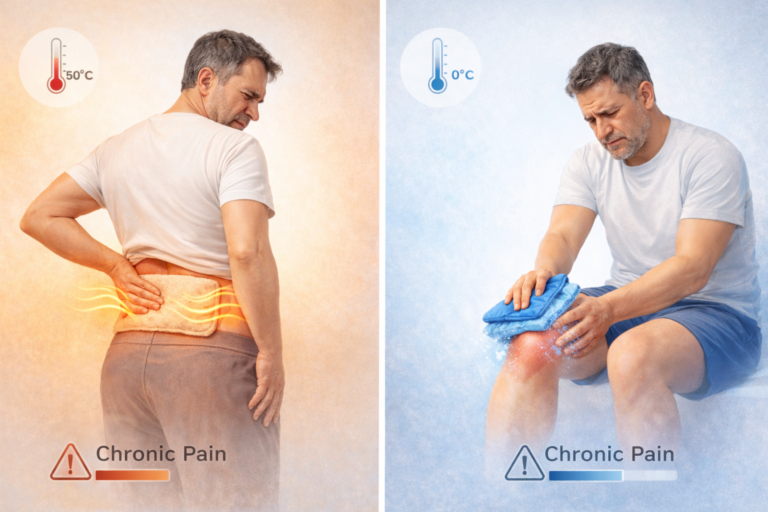
Staying warm is the most consistent recommendation across both clinical guidance and patient experience. When joints get cold, synovial fluid thickens and becomes less viscous, making it more difficult to move and causing stiffness and pain.
Practical steps: dress in moisture-wicking base layers before adding insulation, use compression gloves for arthritic hands, apply heated pads to stiff joints before morning movement, and consider warm baths or showers to ease overnight stiffness before getting out of bed.
Keep Moving — Inactivity Is Its Own Pain Amplifier
About 60% of Americans say they exercise less during winter. Inactivity leads to deconditioning, weakened muscles, and stiffer joints — all of which worsen pain over time.
You don’t need to brave the cold to stay active. Gentle yoga, treadmill walking, warm water pool therapy, and indoor stretching routines all maintain the circulation and muscle support your joints need. Even 10 minutes of morning movement can make a measurable difference in daily pain levels.
Use Heat Therapy Intentionally
Heat relaxes tight muscles, improves circulation, and reduces stiffness. Apply moist heat — not dry — for 15–20 minutes to affected joints or the lower back before activity. Heated pools offer a particularly effective combination of warmth and low-impact movement for patients with widespread pain.
Hydrate More Than You Think You Need To
Cold and dry winter air — as well as humid summer conditions — both promote dehydration. Dehydration worsens muscle cramping, reduces joint lubrication, and amplifies pain sensitivity. Aim for consistent water intake throughout the day, not just when thirsty.
Track Your Triggers
Not all chronic pain patients respond to the same weather variables. Some are most sensitive to cold, others to humidity, and others to barometric pressure drops. Keeping a simple weather-pain journal — noting pain levels alongside daily conditions — can help you and your provider identify your personal pattern and adjust your management plan accordingly.
Seasonal Adaptation Strategies for Chronic Pain Patients
Weather-related flares are more manageable when you plan proactively rather than reacting after pain spikes. Here’s a framework to discuss with your pain specialist:
Before cold season begins: Review your current medication regimen, ask about whether a booster injection — such as a joint or epidural steroid injection — might be appropriate before winter, and set up your physical therapy schedule for the colder months.
During high-risk weather events: Have your heat therapy tools ready, avoid cold exposure to vulnerable joints, reduce high-impact activity, and prioritize sleep — fatigue dramatically lowers pain tolerance.
Ongoing monitoring: If weather-related flares are becoming more frequent, more severe, or lasting longer than a few days, that’s a signal your underlying condition may be progressing — not just the weather acting up. A specialist evaluation can distinguish the two.
For patients with conditions like fibromyalgia, advanced spinal degeneration, or complex regional pain syndrome, seasonal management may also include regenerative medicine options that help address the underlying structural vulnerabilities driving weather sensitivity.
When to See a Pain Specialist
If cold weather is consistently triggering pain that interferes with sleep, daily activities, or work — or if your current treatment plan isn’t controlling seasonal flares — it’s time for a professional reassessment.
Weather-related pain is not something you simply have to endure. At Advanced Spine and Pain Centers, our providers across Virginia, Maryland, and Delaware work with patients to build individualized treatment plans that account for seasonal variation, flare patterns, and the specific conditions driving your pain.
Schedule a consultation to discuss a winter-ready pain management plan.
Final Thoughts
Does cold weather make pain worse? For the majority of chronic pain patients, yes — and the mechanisms are real and well-documented, even if the science is still refining exactly how much. What matters most is understanding your triggers, building a proactive management plan, and recognizing that weather-related flares are a clinical signal — not just bad luck.
The goal isn’t to move to a warmer zip code. It’s to build a lifestyle and treatment strategy that lets you manage pain regardless of what the forecast says.