
Did you know that your acetabulofemoral joints do truly amazing things for you? We know that’s a mouthful, but we’re just talking about your hips, your strong and flexible ball and socket joints.
When you suffer from hip pain, your life can be severely disrupted. And it’s hard to know whether your hip pain is something you should wait out or whether it deserves medical attention.
Dr. Brian Lee, Dr. Randy Davis, and Dr. Thomas Raley provide advanced care for a broad range of hip conditions, from mild problems to issues that necessitate a hip replacement. Entrusting your care to them means that you receive expert treatment using state-of-the-art medical technology and empathy.
Your hips allow you to do so much
Your hips bear substantial weight, yet enable you to move in many different ways. Your hip facilitates:
- Moving your leg outward to the side of your body as well as inward toward your other leg
- The back and forth movement of your leg
- Rotation, which is when you point your toes inward (internal rotation) or outward (external rotation) and are able to move your straightened leg toward your toes
These mechanics make you able to walk, run, squat, crawl, and more.
When should I seek treatment for hip pain?
If you had a day of intense gardening or sports, you may feel hip pain that’s only temporary, but chronic health conditions, age, pain severity, and length of time suffering point to the need for a doctor’s visit.
Understand that hip pain isn’t one type of generic pain. You might ache, experience limited mobility, notice swelling near your hip, and even have problems putting weight on your hip. You may also experience numbness or tingling that might extend to your leg.
Our team is most interested in uncovering the root cause of your hip pain to make an accurate diagnosis. Possible cause are:
- Overuse
- Traumatic injury
- A chronic condition
After an evaluation and taking your medical history, we discuss lifestyle habits. For example, if you stand or sit most of the day for work, you are more prone to getting pinched nerves in your hip.
A hip sprain may be caused by overdoing it while playing a sport, while a hip fracture is often the result of a more serious injury, like one sustained in a car accident.
An important consideration when we create your treatment plan also is if you suffer from a chronic degenerative condition like arthritis and osteoporosis, as well as autoimmune conditions like rheumatoid arthritis.
Hip pain treatment options for when pain persists
If your pain doesn’t resolve after home treatment and a period of intentionally slowing down, it’s time to visit us at Advanced Spine and Pain. We offer treatments that range from noninvasive to surgical, including:
1. A course of physical therapy and medication are key components of our noninvasive treatment path, as well as plenty of rest.
2. A minimally invasive hip pain treatment is a series of steroid injections, which helps with inflammation and gives your nerves a break.
3. Exciting regenerative treatment options include platelet-rich plasma therapy and stem cell treatment. They harness your body’s own healing powers to resolve hip pain.
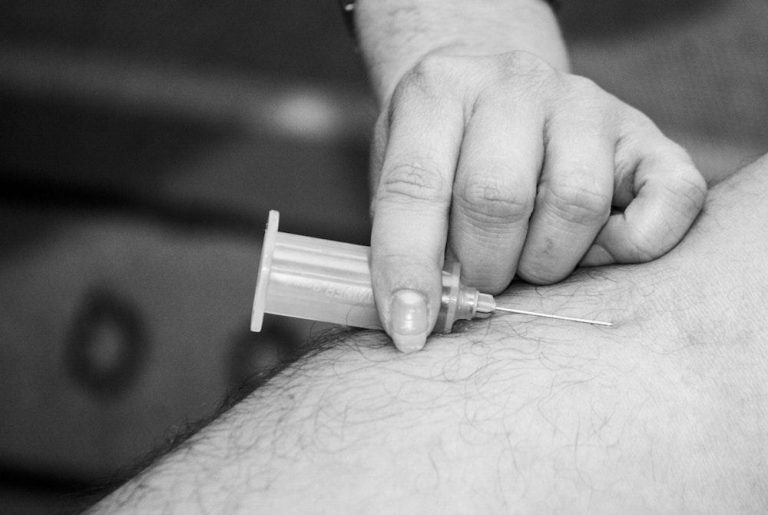
Stem cell therapy involves getting a blood sample from you, as well as anesthetizing a spot on the back of your hip and taking a small bone marrow sample using a needle. We spin the marrow and blood in a device called a centrifuge, which separates your platelets and stem cells from the original samples.
Next, the platelets and stem cells are reinjected into your area of pain. Stem cells regenerate in many different ways, which makes them ideal for orthopedic therapeutic use. The robust cells produce and replace “sick” cells that were harmed by degenerative disease.
Platelet-rich plasma therapy causes similar healing, but only involves taking a blood sample.
Both methods hasten healing, lower your pain, increase mobility, and actually protect you from injury in the future. They also promote collagen production, which is the protein in your connective tissue that creates healthy joints.
4. Surgical solutions are the best options if your hip has been devastated by degenerative disease or if you’ve broken your hip.
Depending on your condition and its severity, we may advise surgery where we place metal screws in your bone while your fracture heals, or we may recommend a partial or total hip replacement, where we use artificial parts to reconstruct your hip.
We’re with you every step of the way if you have hip surgery, and see you through your complete recovery.
Don’t delay calling the Advanced Spine and Pain office that’s most convenient to you and scheduling an appointment if your hip pain is severe or persistent, or book one with us online — we’re here to help!
]]>